
Easy Homemade Beef Stew – Hearty & Delicious Comfort Food
Easy homemade beef stew is the ultimate comfort food, a warm hug in a bowl that banishes chills and nourishes the soul. There’s something universally beloved about a rich, savory beef stew, isn’t there? The slow-cooked, tender chunks of beef mingling with hearty vegetables, all swimming in a deeply flavored broth – it’s a culinary masterpiece that conjures memories of cozy evenings and shared meals. What makes this easy homemade beef stew so special, you ask? It’s the magic that happens when simple, wholesome ingredients transform into something truly extraordinary with minimal fuss. No fancy techniques or obscure ingredients required, just pure, unadulterated deliciousness that will leave you feeling utterly content. Get ready to create a family favorite!

Easy Homemade Beef Stew
There’s something incredibly comforting about a hearty bowl of beef stew, especially on a chilly evening. It’s the kind of meal that warms you from the inside out, filled with tender chunks of beef, savory vegetables, and a rich, flavorful broth. While it might seem like a dish reserved for slow-cooked weekends, I’m here to tell you that you can achieve incredibly delicious results with a relatively simple approach. This recipe focuses on bringin extractg out the best in every ingredient, creating a deeply satisfying stew that feels both rustic and refined. We’re talking about a one-pot wonder that minimizes cleanup and maximizes flavor. Forget those store-bought versions with watery broth and tough meat; we’re making the real deal, right in your own kitchen.
The beauty of this stew lies in its simplicity and the quality of the ingredients. We’re not overcomplicating things with a long list of exotic spices. Instead, we’re relying on the natural goodness of beef, fresh vegetables, and a few pantry staples to create something truly special. It’s a forgiving recipe, meaning even if your chopping isn’t perfectly uniform, the end result will still be fantastic. This is the kind of meal that can be enjoyed by the whole family and is perfect for making ahead, as the flavors often deepen and meld beautifully overnight.
Ingredients:
Cooking Instructions:
1. Preparing the Beef for Flavor
The first step to a flavorful stew starts with the beef. Take your beef chuck roast, which has been cut into generous 2-inch chunks, and pat it completely dry with paper towels. This step is crucial for achieving a beautiful sear, which locks in moisture and adds a wonderful depth of flavor to the stew. Season the beef generously on all sides with the kosher salt and coarsely ground black pepper. In a shallow dish or a large zip-top bag, add the gluten-free all-purpose flour (or whole wheat flour). Toss the beef chunks in the flour until they are lightly and evenly coated. This flour coating will help thicken our stew as it cooks, creating that luscious, velvety texture we all love. Shake off any excess flour before moving to the next step.
2. Searing for Richness
Now it’s time to build that foundational flavor. Heat the olive oil (or avocado oil) in a large, heavy-bottomed pot or Dutch oven over medium-high heat. You want the oil to be shimmering but not smoking. Carefully add the floured beef chunks to the hot pot in a single layer, working in batches if necessary to avoid overcrowding. Overcrowding will steam the meat instead of searing it, and we want that beautiful brown crust. Sear the beef for 2-3 minutes per side, until it’s nicely browned all over. This searing process is key to developing a rich, savory base for our stew. Once seared, remove the beef from the pot and set it aside on a plate. Don’t worry about any browned bits stuck to the bottom of the pot – that’s pure flavor!
3. Aromatics and Deglazing
Reduce the heat to medium. Add the chopped yellow onion to the same pot and cook, stirring occasionally, for about 5-7 minutes, or until the onion is softened and translucent. Scrape up any browned bits from the bottom of the pot as the onions cook; these bits are packed with flavor. Add the minced garlic and cook for another minute until fragrant, being careful not to burn it. Now, pour in the beef broth, scraping the bottom of the pot to loosen any remaining browned bits. This is called deglazing, and it’s a critical step for infusing your stew with maximum flavor. Stir in the tomato paste and Worcestershire sauce until well combined. The tomato paste adds a beautiful depth of color and a subtle tangy sweetness.
4. Simmering to Tenderness
Return the seared beef chunks to the pot, along with any accumulated juices from the plate. Add the large carrot chunks and the diced Yukon Gold potatoes. Tuck in the bay leaf. Ensure that the liquid mostly covers the ingredients. If it doesn’t quite reach the top, you can add a little more beef broth or water. Bring the mixture to a gentle simmer, then reduce the heat to low, cover the pot, and let it cook for at least 1.5 to 2 hours, or until the beef is fork-tender and the vegetables are cooked through. The longer it simmers, the more the flavors will meld and deepen. Check periodically to ensure it’s not boiling vigorously, and give it a gentle stir to prevent sticking.
5. Finishing and Serving
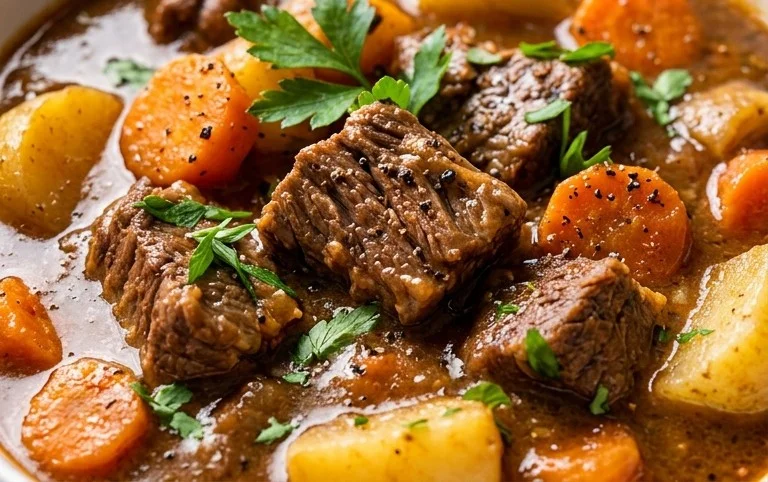
Once the stew has reached your desired tenderness, remove and discard the bay leaf. Taste the stew and adjust seasoning with additional salt and pepper if needed. If the stew seems a little too thin for your liking, you can create a slurry by mixing 1 tablespoon of cornstarch or flour with 2 tablespoons of cold water, then stirring it into the simmering stew until thickened. Ladle the hot beef stew into bowls. Garnish generously with fresh thyme leaves for a burst of bright, herbaceous flavor. This stew is fantastic served on its own, or with crusty bread for dipping. Enjoy the fruits of your labor – a truly satisfying and homemade beef stew!
Conclusion:
There you have it – the roadmap to a truly delicious and incredibly easy homemade beef stew! This recipe is fantastic because it proves that comforting, slow-cooked meals don’t require hours of active prep. We’ve focused on simple steps and readily available ingredients to bring you a hearty, flavorful dish that’s perfect for chilly evenings or whenever you need a taste of home. The tender chunks of beef, softened vegetables, and rich, savory broth create a symphony of flavors and textures that will have everyone asking for seconds.
This easy homemade beef stew is incredibly versatile when it comes to serving. It’s absolutely divine on its own, letting its rich flavors shine. However, it also pairs wonderfully with crusty bread for dipping, fluffy mashed potatoes, or even a side of simple rice. Don’t be afraid to experiment with variations either! You can add a splash of red grape juice for an extra layer of depth, toss in some mushrooms for an earthy note, or even swap out some of the root vegetables for parsnips or sweet potatoes. I truly encourage you to give this recipe a try; you’ll be amazed at how simple it is to create such a satisfying meal.
Frequently Asked Questions:
What is the best cut of beef for stew?
For the most tender and flavorful stew, I recommend using cuts like chuck roast, beef brisket, or even beef round. These cuts have enough connective tissue that breaks down during slow cooking, resulting in melt-in-your-mouth beef. Avoid leaner cuts as they can become dry and tough.
Can I make this stew ahead of time?
Absolutely! In fact, beef stew often tastes even better the next day. The flavors have more time to meld together. Simply let it cool completely after cooking, then store it in an airtight container in the refrigerator. Reheat gently on the stovetop or in the oven.
How can I thicken my beef stew if it’s too thin?
If your stew isn’t as thick as you’d like, you have a couple of easy options. You can create a slurry by mixing a tablespoon or two of cornstarch with an equal amount of cold water, then stirring it into the simmering stew until it thickens. Alternatively, you can mash some of the cooked potatoes or carrots against the side of the pot to release their starches and thicken the broth naturally.
Easy Homemade Beef Stew
A comforting and simple beef stew recipe perfect for a hearty meal. This recipe uses tender beef chuck, vegetables, and a rich broth, thickened for a satisfying consistency. It’s adaptable for various dietary needs.
Ingredients
-
2 pounds Beef Chuck Roast (cut into 2-inch chunks, excess fat removed)
-
1 teaspoon Kosher Salt
-
½ teaspoon Coarsely Ground Black Pepper
-
2 tablespoons Gluten-free All-Purpose Flour
-
2 tablespoons Olive Oil
-
½ Yellow Onion (Chopped Large)
-
4 Garlic Cloves (minced)
-
1 Large Carrot (cut into 2-inch chunks)
-
2 Yukon Gold Potatoes (diced into 2-inch pieces)
-
2 Cups Beef Broth
-
¼ Cup Tomato Paste
-
1 tablespoon Worcestershire Sauce
-
1 Bay Leaves
-
2 teaspoons Fresh Thyme Leaves (to garnish)
Instructions
-
Step 1
Pat the beef chuck dry with paper towels. Season generously with salt and pepper. Toss the beef with gluten-free all-purpose flour until evenly coated. -
Step 2
Heat olive oil in a large Dutch oven or heavy-bottomed pot over medium-high heat. Brown the beef in batches, ensuring not to overcrowd the pot. Remove browned beef and set aside. -
Step 3
Add the chopped yellow onion to the pot and cook until softened, about 5-7 minutes. Stir in the minced garlic and cook for another minute until fragrant. -
Step 4
Return the browned beef to the pot. Add the beef broth, tomato paste, Worcestershire sauce, and bay leaves. Stir to combine, scraping up any browned bits from the bottom of the pot. -
Step 5
Bring the stew to a simmer, then reduce heat to low, cover, and cook for 1.5 to 2 hours, or until the beef is tender. Stir occasionally. -
Step 6
Add the carrots and potatoes to the pot. Cover and continue to simmer for another 30-45 minutes, or until the vegetables are tender. -
Step 7
Remove the bay leaves before serving. Garnish with fresh thyme leaves.
Important Information
Nutrition Facts (Per Serving)
It is important to consider this information as approximate and not to use it as definitive health advice.
Allergy Information
Please check ingredients for potential allergens and consult a health professional if in doubt.